The figure or the record
Attribution vendors publish the vocabulary that any acquisition-payback claim for a coin app depends on. AppsFlyer's glossary defines return on ad spend, ROAS, as "a metric that helps app marketers understand which campaigns and ads are working by measuring how much revenue was earned in comparison to how much budget was spent," calculated as revenue divided by cost. The same publisher's retention-rate glossary entry defines that separate metric as "the percentage of customers who continue to use your service or product over a predetermined period," distinguishing it explicitly from lifetime value. Its LTV entry defines lifetime value as "an estimate of the average revenue a customer will generate over the time that they use a given product or service," and states that "a good LTV:CAC ratio is at least 3:1."
What the documents establish
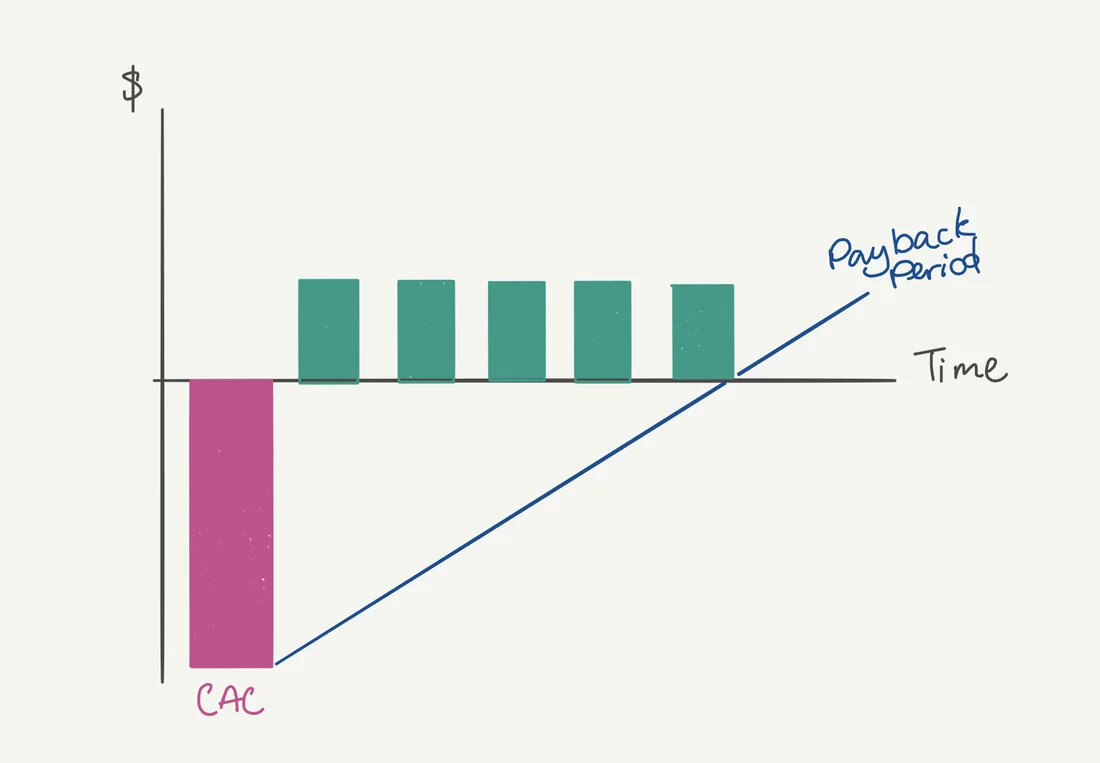
Read together, the three entries establish that a payback claim is not one number but a chain of them: ROAS answers whether spend produced revenue at all, retention answers how many of the acquired users are still present to generate that revenue, and LTV answers what a typical user in a given acquisition cohort is worth once both spend and time are accounted for. The retention entry also documents a specific method, cohort analysis, defining "acquisition cohorts" as groups of users segmented by their signup or install date specifically so that their retention can be tracked from a common starting point, the same logic a coin app would need to apply to a group of users acquired from one campaign on one day.
Scope and caveats
These are vendor glossary definitions, explaining terminology inside AppsFlyer's own product, not measurements of any specific app's performance; no figure here describes any short-drama app's actual ROAS, retention or LTV. None of the three entries uses the term "payback period," so a payback-period claim for a coin app should be checked against a source that defines that term, not assumed from these definitions. A 3:1 LTV:CAC ratio is a general benchmark for profitability, not a rule verified for vertical-drama acquisition specifically.
What to watch
Editorially, a payback claim is well-formed only if it names its cohort (acquired when, from which channel), its window (over how many days), and which of the three metrics, ROAS, retention or LTV, it actually reports, since the three are often used loosely as if interchangeable.
- When a company reports "payback in N days," does it specify the acquisition cohort and channel, or is it a single company-wide average?
- Does a quoted ROAS figure include only in-app purchase revenue, or also advertising revenue from the same cohort's rewarded-ad views?
- Is a stated retention rate measured against installs, or against a later step such as first purchase, which would produce a higher number from the same data?
The vocabulary is precise even where the numbers behind it are not yet supplied; a reader unsure which of these three terms a headline payback figure rests on should treat it as unverified until the cohort and window are named.
Sources & reading trail
Defines ROAS and its calculation, and notes an early-cohort predictive signal for profitability.
Source published: Not established · Retrieved: 16 September 2026
Defines retention rate and cohort analysis, distinguishing acquisition cohorts from lifetime value.
Source published: Not established · Retrieved: 16 September 2026
Defines LTV and the LTV:CAC ratio benchmark, and distinguishes lifetime from activity cohort data.
Source published: Not established · Retrieved: 16 September 2026
Filings, releases and official documents establish the record; the scope reading and the questions are Vertical Ledger editorial analysis. This retrospective draft does not imply the site published on the event date.